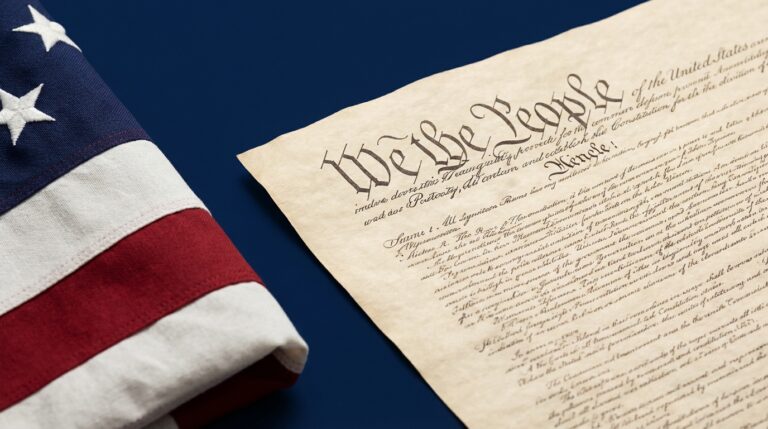
This article explains what the clause says, why framers added it, and how modern scholars and policy analysts treat it in debates about the debt ceiling. The goal is to give readers reliable sources and practical guidance on where interpretation stands today.
Quick answer: what Clause 4 says and why it matters
Clause 4 of the Fourteenth Amendment declares, in its operative language, that “the validity of the public debt of the United States, authorized by law…shall not be questioned,” a phrase placed in the amendment to protect the government’s legal obligations after the Civil War, as the National Archives text shows National Archives, Fourteenth Amendment text.
This clause means, in plain language, that debts the United States lawfully incurs are to be treated as valid and not subject to repudiation; historical records describe that purpose in the postwar period Library of Congress, Fourteenth Amendment documents.
In recent years the clause has returned to public attention as part of debates over the federal debt ceiling, with policy analyses stressing the clause as a constitutional argument against allowing a default while also noting that the courts have not yet established a clear enforcement mechanism, according to Congressional Research Service and legal commentary CRS report on the Fourteenth Amendment and the debt ceiling.

Plain reading of the text
Read plainly, the clause shields the validity of federal public debt from rhetorical or legal challenge; that shield was added at a moment when the United States sought to reassure creditors and prevent states or other actors from repudiating obligations, as the historical text shows National Archives, Fourteenth Amendment text.
One-sentence takeaway for readers
The short takeaway is that Clause 4 is a constitutional statement protecting public-credit obligations, and today it functions as a constitutional argument against default even though its practical enforcement remains unsettled in the courts CRS report on the Fourteenth Amendment and the debt ceiling.

Historical context: why clause 4 was added in 1868
In the aftermath of the Civil War, lawmakers and officials worried about repudiation of debt issued by the federal government during and after the conflict, and Congress and Reconstruction framers inserted language to protect holders of public debt, a purpose reflected in primary historical sources Library of Congress, Fourteenth Amendment documents.
Public-credit concerns were practical as well as political. Credit markets and bondholders needed assurance that obligations issued under the Union name would be honored, and that assurance shaped the amendment’s drafting and adoption, as scholars and primary documents explain National Archives, Fourteenth Amendment text.
Historical overviews show that the clause’s original aim was narrow: to bar repudiation and to secure trust in federal debt instruments, not to create broad executive powers; that historical purpose continues to inform modern interpretation but does not by itself determine legal remedies in present disputes Library of Congress, Fourteenth Amendment documents.
Text and clause-by-clause commentary: reading the language closely
The operative phrase to focus on is “the validity of the public debt of the United States…shall not be questioned,” and careful readers note that the clause speaks about validity rather than prescribing specific remedies or procedures, as the clause text and legal guides make clear National Archives, Fourteenth Amendment text.
Clause-by-clause commentary emphasizes words such as “validity” and “authorized by law” as legally significant, since they frame the protection around debt that was lawfully incurred and thus raise technical questions about what debt fits that description, according to the Legal Information Institute commentary LII Fourteenth Amendment commentary.
guide readers through clause-by-clause items to review
Use this to structure careful reading
Close reading matters because debates about remedies and executive authority turn on how narrowly or broadly courts interpret the clause, and authoritative clause-by-clause resources help explain the range of interpretive choices without asserting new legal rules LII Fourteenth Amendment commentary.
Modern legal debate: Clause 4 and the debt ceiling since 2023
From 2023 onward, analysts and policymakers reexamined Clause 4 as one constitutional argument that a federal default would be impermissible, and the Congressional Research Service documents that this discussion shaped policy conversations during debt-ceiling standoffs CRS report on the Fourteenth Amendment and the debt ceiling and related CRS material Clearing the Air on the Debt Limit (Congress.gov).
Commentators split into two main lines: some argue the clause forbids questioning the validity of public debt in any circumstance that would produce default, while others contend the clause does not give the President authority to act outside statutory limits to avoid default; this debate is well summarized in major legal commentary LII Fourteenth Amendment commentary.
Clause 4 offers a constitutional argument that a default should not occur, but it does not on its own provide a settled, adjudicated mechanism to override statutory limits; resolving that question would likely require litigation and a court decision.
That scholarly split means modern applications have been advisory or interpretive in nature, with legal experts offering competing views rather than a settled judicial rule, as Lawfare and other legal commentators have observed Lawfare analysis of the Fourteenth Amendment.
What courts have (and have not) said: litigation and the absence of a definitive ruling
There is no definitive Supreme Court decision that construes Clause 4 to permit extrastatutory executive action to avoid default, and legal overviews note that the clause’s remedial scope remains unsettled in judicial practice Library of Congress, Fourteenth Amendment documents (see state-level overview).

Analysts caution that until a high court offers a clear construction in a live case, the clause will remain a persuasive constitutional argument rather than settled precedent, and that uncertainty shapes how officials and markets consider its practical effect CRS report on the Fourteenth Amendment and the debt ceiling.
Practical scenarios: how Clause 4 might be invoked and common misunderstandings
Scholars and policy analysts have sketched likely remedial steps that a court or official might consider, such as declaratory relief, injunctions to ensure payment, or accounts-based executive arguments, and CRT and legal commentary summarize these possibilities as contingent and contested CRS report on the Fourteenth Amendment and the debt ceiling and related coverage Debt Ceiling Q&A (CRFB).
Common misunderstandings include thinking Clause 4 automatically permits the President to ignore statutes or to mint legal workarounds without judicial review; commentators stress that such claims exceed what the clause text alone establishes and that any extraordinary steps would likely invite litigation SCOTUSblog discussion of Clause 4 and default.
For readers, a practical rule of thumb is to treat Clause 4 as a constitutional argument that raises enforceable questions only if courts accept it in litigation; treating it as a guaranteed operational fix for a debt crisis overstates current law Lawfare analysis of the Fourteenth Amendment.
How to evaluate sources and follow updates on Clause 4
Primary texts and authoritative repositories are the best starting points: read the amendment text at the National Archives, historical drafting materials at the Library of Congress, and up-to-date analyses from CRS and the Legal Information Institute to track changes in interpretation National Archives, Fourteenth Amendment text.
Join updates and follow the campaign for clear, dated information
Consult primary sources and CRS summaries to track legal developments and to see whether courts take up cases that change how Clause 4 is applied.
When evaluating commentary, prioritize dated, source-based pieces and consider whether an author is reporting historical facts, offering legal interpretation, or recommending policy; labeled analysis from CRS and well-sourced legal commentary are useful ways to separate interpretation from advocacy CRS report on the Fourteenth Amendment and the debt ceiling.
Conclusion: what Clause 4 means now and what to watch next
Clause 4 protects the validity of public debt as a constitutional statement written after the Civil War to prevent repudiation, and primary sources make clear that purpose National Archives, Fourteenth Amendment text.
At present the clause serves as a constitutional argument against default, but its operational effect depends on future litigation or a definitive Supreme Court interpretation; watch for major federal litigation or a high court ruling to change that picture, as CRS and legal commentary note CRS report on the Fourteenth Amendment and the debt ceiling.
Until courts provide a clear remedial framework, readers should treat Clause 4 as an important constitutional claim with unsettled practical consequences rather than as a settled rule that authorizes specific executive action LII Fourteenth Amendment commentary.
In simple terms, Clause 4 says that the validity of the United States public debt shall not be questioned, meaning lawfully incurred federal obligations are protected from repudiation.
No clear judicial ruling says the President may bypass statutory limits under Clause 4; scholars disagree and the question would likely require litigation to resolve.
Start with the National Archives for the amendment text, the Library of Congress for historical materials, and CRS and LII for current legal analysis.
Readers who follow the primary texts and authoritative commentary will be best positioned to assess any change if litigation or Supreme Court review produces a new ruling.
References
- https://www.archives.gov/founding-docs/amendments-11-27#fourteenth
- https://www.loc.gov/rr/program/bib/ourdocs/14thamendment.html
- https://crsreports.congress.gov/product/pdf/LSB/LSB10912
- https://michaelcarbonara.com/contact/
- https://www.law.cornell.edu/constitution/amendmentxiv/
- https://www.lawfaremedia.org/article/the-fourteenth-amendment-and-the-debt-ceiling-legal-and-historical-analysis
- https://www.congress.gov/crs_external_products/R/PDF/R45011/R45011.5.pdf
- https://www.ncsl.org/resources/details/the-debt-ceiling-and-the-14th-amendment-the-jury-is-still-out
- https://www.crfb.org/papers/qa-everything-you-should-know-about-debt-ceiling
- https://www.scotusblog.com/2023/05/could-the-14th-amendment-prevent-a-default/
- https://michaelcarbonara.com/issue/strength-security/
- https://michaelcarbonara.com/news/
- https://michaelcarbonara.com/issue/constitutional-rights/