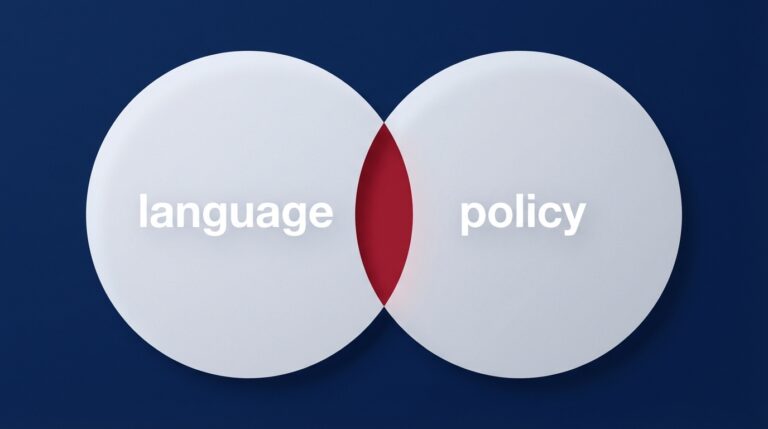
The goal is to help voters, students and civic readers make evidence-based judgments. The article draws on contemporary reference definitions, public-opinion analysis, campus and policy studies, and peer-review syntheses.
What american political correctness means: a working definition
At a basic level, american political correctness describes language and behavior norms intended to avoid offending marginalized groups. Contemporary reference work definitions treat it this way as a set of social norms and usage practices aimed at respectful speech, and that framing helps separate ordinary politeness from broader institutional debates Encyclopaedia Britannica.
Scholars add a second layer: they study political correctness as a social and political phenomenon with mechanisms and effects. That literature looks at who enforces norms, how enforcement happens, and what consequences follow, which distinguishes polite correction from power-driven sanctions Annual Review of Political Science.
How public opinion frames PC culture: accountability versus silencing
Surveys show Americans are divided in how they describe cancel culture and related debates. Many respondents see such actions as holding people accountable, while others view them as silencing, so public opinion does not settle whether american political correctness is mainly etiquette or coercion Pew Research Center.
That split matters because political rhetoric often treats the matter as settled. When a survey finds mixed views, it suggests context matters: people answer differently depending on the actor, the content of speech, and the outcome. This ambiguity is one reason debates about the political correctness debate remain contested.
When politeness becomes institutional: media, campuses and workplaces
Many discussions of PC culture focus on cases where media coverage, employer action or public censure create material consequences for speakers, and analysts highlight how reputational and institutional sanctions change the stakes of language disputes Brookings analysis.
See realistic scenarios and apply the checklist
Read the practical scenarios that follow to see how the same exchange can stay polite or become an institutional matter.
Campus incidents illustrate the overlap between interpersonal and institutional responses. Reports by free-expression monitors note that disputes often combine peer pressure with formal administrative responses, which can turn a classroom exchange into a matter of university policy FIRE report.
When institutions weigh in, consequences can include event cancellations, disciplinary notices, or reputational damage that affects employment and public standing. That is why many observers argue we should treat institutional responses as central when asking whether a case is more than ordinary etiquette.

A practical framework scholars use asks three questions about any incident: who enforced the norm, what mechanism enforced it, and what were the consequences. This checklist comes from peer-review syntheses that emphasize the role of actor and mechanism in distinguishing politeness from coercion Annual Review of Political Science.
Use the three parts as brief headings when you evaluate a case: actor, mechanism, consequence. For actor, ask whether the response came from peers, a private employer, a university office, or state authority. For mechanism, ask whether enforcement was social pressure, an HR process, or a legal or contractual sanction. For consequence, ask whether the outcome was a rebuke, a temporary reputational hit, or more lasting effects like termination or disciplinary record.
PC culture can describe ordinary polite language, but when institutions, media or employers impose formal sanctions or cause reputational harm, the issue moves beyond etiquette to questions of power and enforcement.
In practice, presence of formal institutional sanctions increases the chance that an incident goes beyond interpersonal politeness, because institutions can impose official penalties or trigger material harms documented in media and policy studies Brookings analysis.
Decision criteria: when to read a case as etiquette and when as coercion
One useful screen is presence of formal sanctions. Evidence that an employer initiated a formal process, that a university imposed discipline, or that a legal or contractual consequence followed points toward an institutional response rather than mere polite correction Brookings analysis.
Other factors include repetition and scale. A one-off rebuke among classmates or colleagues with no follow-up is more plausibly etiquette. By contrast, repeated enforcement, formal discipline, or a measurable reputational cascade suggest the case may involve institutional power and material consequences, as campus reports and institutional case studies note FIRE report.
Common mistakes readers make when judging PC incidents
A frequent error is equating hurt feelings or offense with censorship. Scholarship cautions that taking offense alone is not proof of coercion; researchers ask instead who acted and what authority they had to impose consequences Annual Review of Political Science.
Another mistake is generalizing from a single high-profile case. Survey evidence shows people interpret cancel culture differently in different contexts, so anecdote bias can mislead readers about broad social trends Pew Research Center. Check for documented policy action or employment outcomes before concluding widespread coercion.
Practical examples and scenarios to apply the framework
Classroom exchange: a student objects to a classmate’s phrasing and requests different language. If the exchange ends with a polite correction and no formal complaint, the incident reads as interpersonal etiquette. Campus reporting shows many classroom disputes remain at the peer level unless an administrative complaint follows FIRE report.

Workplace disagreement: an employee posts a controversial comment and colleagues complain. If HR opens an investigation and a formal warning or termination follows, the case involves institutional mechanisms and could have material effects. Workplace research documents how employers create formal processes that shape real outcomes SHRM guidance.
Viral social media controversy: a public figure’s comment goes viral, media attention grows, and sponsors or employers distance themselves. Analyses of media and reputational risk explain how publicity can escalate consequences without formal institutional action Brookings analysis.
How employers are balancing respect and expression
Human resources research documents trends in employer policies that try to balance respectful communication and employee expression, with codes of conduct, complaint channels, and training being common measures SHRM guidance.
Typical employer measures include written codes of conduct, clear complaint procedures, investigative steps, and training on respectful dialogue. These formal rules mean employers, not individual etiquette, often determine whether speech leads to formal consequences.
neutral workplace checklist to review a speech-related complaint
Use as a starting point for internal review
Employers also weigh free-expression concerns against workplace safety and inclusion. When a complaint triggers an HR process, the mechanism and documentation matter more than the initial emotional reaction for deciding whether a case is institutional.
Campus disputes and the role of university policies
Campus reports find that disputes often combine interpersonal norms with administrative responses. Common mechanisms include disciplinary review, event cancellations, and academic consequences when complaints trigger formal procedures FIRE report.
Debates on campuses frequently pit academic freedom against community standards, and university policy language affects outcomes. Whether an action is deemed a breach of policy can determine whether a case stays a local dispute or becomes a formal matter.
Media, reputational risk and the mechanics of public sanctioning
Media attention can amplify a local incident into a public controversy that affects jobs and professional networks. Policy analyses emphasize reputational risk and public pressure as central mechanisms by which speech disputes become consequential Brookings analysis.
Publicity can lead to speaking cancellations, sponsor withdrawals, or professional isolation even when no formal institutional penalty is recorded. This is why media-driven consequences deserve separate consideration from mere interpersonal rebuke.
What scholarship says about measurement and long-term effects
Scholarly reviews stress the need for careful measurement before claiming broad chilling effects. Researchers recommend examining sanctioning actor, enforcement mechanism, and empirical outcomes rather than extrapolating from a few high-profile cases Annual Review of Political Science.
Long-term effects on pluralistic discourse remain an open research area. Evidence to date is mixed and limited, so cautious, evidence-based conclusions are more reliable than sweeping claims about the social impact of political correctness.
How readers can talk about sensitive topics constructively
Use simple practices in conversation: ask clarifying questions, name specific words or acts that bothered you, and offer alternatives. If a pattern of harm or threats appears, report according to workplace or campus procedures suggested by HR research SHRM guidance.
Consider escalation when behavior repeatedly violates policy, when threats or harassment are present, or when the situation affects safety or core duties. Campus and HR reporting channels exist to handle policy violations and documented harms FIRE report.
Quick guide for voters and civic readers: what matters for public debate
For civic readers, the key distinction is whether institutional power and formal mechanisms are involved. Policy and media analyses explain why this distinction matters for public debate over regulation and free expression Brookings analysis.
When politicians or media claim a culture of silencing, ask simple questions: who acted, what mechanism did they use, and what were the documented consequences. Consult primary sources or institutional records before accepting broad claims, as scholars recommend Annual Review of Political Science.
Conclusion: american political correctness is not only politeness, context and power matter
Reference definitions view political correctness as a set of language and behavior norms, but scholarship emphasizes that actor, mechanism and consequence determine whether an incident is mere etiquette or an institutional matter Encyclopaedia Britannica.
Use the three-part framework and decision criteria outlined above. Make cautious, evidence-based judgments and check institutional records when possible before concluding that american political correctness represents coercive censorship.
Political correctness usually means language and behavior norms meant to avoid offending marginalized groups.
Not necessarily; media attention can create reputational risk that has material effects, but censorship implies formal or legal suppression by an authority.
Report when there is a pattern of harm, threats, clear policy violations, or when the behavior affects safety or job performance.
Careful, evidence-based evaluation matters for civic debate about free speech and policy.
References
- https://www.britannica.com/topic/political-correctness
- https://www.annualreviews.org/doi/10.1146/annurev-polisci-2023
- https://www.pewresearch.org/fact-tank/2022/08/22/most-americans-say-cancel-culture-means-holding-people-accountable-not-silencing-them/
- https://www.brookings.edu/articles/when-cancel-culture-becomes-institutional/
- https://www.thefire.org/research/campus-free-speech-2024/
- https://www.shrm.org/resourcesandtools/hr-topics/employee-relations/pages/workplace-political-expression-2024.aspx
- https://michaelcarbonara.com/contact/
- https://www.ap.org/news-highlights/spotlights/2026/americans-are-exceptionally-anxious-about-their-political-system-new-gallup-polling-shows/
- https://hub.jhu.edu/2026/02/09/snf-agora-political-divides-generations/
- https://tcf.org/content/report/centurys-new-democracy-meter-shows-america-took-an-authoritarian-turn-in-2025/
- https://michaelcarbonara.com/issues/
- https://michaelcarbonara.com/about/